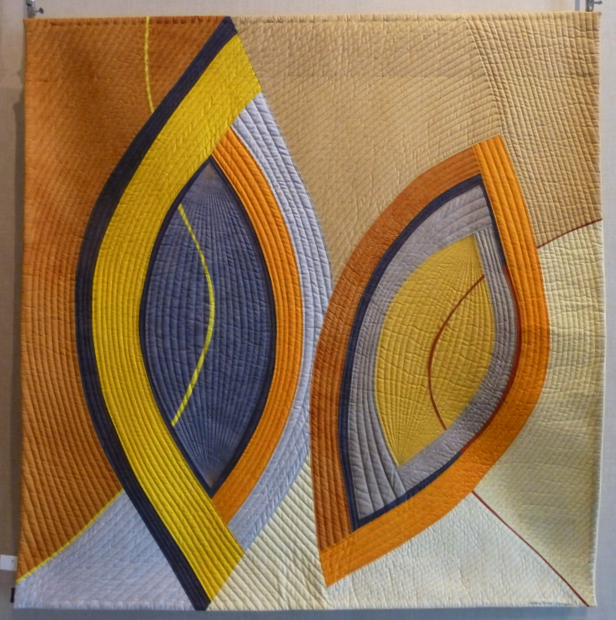
25 December 2022
Happy Holidays and Best Wishes for 2023
12 March 2022
A Bouquet from far away
| Summer is on its way. |
I received an email newsletter from Cheshire Garden, an organic farm in New Hampshire whose proprietors Patti and Ralph used to sell their wonderful preserves and mustards at our local farmer's market.
They no longer visit our market but I still do mail order. Anyway, the newsletter concluded with this wonderful image of zinnias and cosmos, a real pick-me-up on the this gray, wet New England day. I thought I would share.
17 December 2021
Goodbye to Nip Bottles
| In Memoriam Nip-orium wreath. |
| Dry fit of nip bottles and caps. |
| Painted cardboard "donut." |
| Add bottles evenly spaced between compass points. |
13 October 2021
Village Day, a neighborhood celebration
![]() |
| DH and young performer in cheetah puppet meet and greet. |
On October 3, our neighborhood of Newton held its annual Village Day. Activities included a dance performance by young members of a local dance studio, temporary tattoos for children, vendors selling everything from pet treats to jewelry, information tables for local conservation groups, and an excellent high school jazz band. Yours truly helped curate the Little Free Library stall. Since it's an election year here in Newton, politicians canvassed, but set partisanship aside long enough to dedicate a memorial plaque to a late, beloved local councilor too.
![]() |
| Tall amphibian meets young human. |
![]() |
| Local knitter Katie B. yarn-bombed parking meters. |
![]() |
| Wearable puppet with a surprisingly affecting face. |
12 November 2019
Autumn colors on the Charles River
![]() |
| Some kind of maple tree with brilliant color. |
On October 14, DH and I took the last 6-mile canoe trip of the season organized by PaddleBoston. Our shuttle driver, and his friendly dog, took us to a launch in Dedham, with kayaks and one canoe (us) in a trailer. We were in no hurry, and just enjoyed a lazy paddle and the autumn panorama of New England in peak leaf season. Who needs Vermont?
![]() |
| Male mallard ducks, called drakes, have beautiful iridescent head feathers. |
![]() |
| Egret. |
As usual on the river, we saw a number of birds, including egrets, great blue herons, cormorants and of course mallard ducks and Canadian geese.
![]() |
| Still water = perfect reflections. |
![]() |
| Gallant husband attempts to pull canoe. |
The water level of the river was extremely low; the DCR diverted water from the Charles earlier in the year to work on the dam at the Museum of Science, and rainfall was lower than usual. In places even the shallow draft of our canoe was insufficient to maintain clearance above the river bed, and we had to get out and walk.
![]() |
| In the center - my favorite tree - I look for it every autumn. |
I was inspired to try and capture these lovely colors and knitted a Broken Garter scarf for myself, using PurlSoho's adaptation of a Sequence Knitting broken garter stitch pattern.
Materials:
I used two lace weight yarns -
Dirty Water DyeWorks "Lillian" line in Topaz, a tonal gold (I love this yarn)
Manos del Uruguay "Alegria" line in Butia, hand-painted with rose, brown, gold and a bit of green
Needles US size 3, for my sins
I cast on 43 stitches
Finished size: approximately 8" by 60", a length which works for me. At a workshop I took with her, Ms. Campochiaro, the author of Sequence Knitting, mentioned that garter stitch items have a lot of lengthwise stretch, so I make the scarves a bit wider and shorter than other scarf patterns.
![]() |
| Broken Garter scarf. |
![]() |
| Last look. |
28 August 2019
Making a batch of play slime
![]() |
| Homemade blue slime. |
![]() |
| Ingredients: white Elmer's school glue, baking soda, contact lens solution, food coloring. |
In anticipation of a grandchild's visit, my kitchen became a laboratory for making slime, a toy currently popular with elementary and middle school kids. This non-sticky but pliable, stretchable substance is a first cousin to silly putty and oobleck.
![]() |
| Equipment: bowl, spatula, measuring spoons, plastic tub for storage. |
I tried two other formulas from random sites on the internet before finding this recipe, which worked for me. A note on the contact lens solution: all purpose solution is fine, but the ingredients list must include boric acid. And finally, utilize equipment - bowls, measuring cups and spoons, spatulas, etc. - dedicated to craft projects ONLY for craft projects, NEVER for food production, serving or eating!
First, empty two four-ounce bottles of white Elmer's school glue into a bowl. (My bowl is the 2.5 quart Pyrex Smart Essentials product.) At this time, add food coloring. Only a few drop so food coloring are needed.
![]() |
| Two drop of blue food coloring added to glue. |
![]() |
| Mix well. |
![]() |
| Add baking soda, mix well again. |
![]() |
| After adding contact lens solution, slime forms quickly. |
I made slime in green and orange too. One caveat - I found that the blue coloring came off on my hands, so it's a good idea to wash hands after playing with darker colors. Not a problem with the orange and green. Slime is best played with at a table or another solid surface, as it might be difficult to remove from clothing and upholstery. There's something very satisfying about it, though, and slime seems to stay "fresh" for quite a while in a plastic tub.
![]() |
| Bubbles are ok. |
28 September 2018
Public art on the Greenway
![]() |
| Puppets at the grand opening. |
Studio Without Walls mounted the show, called Beyond Boundaries, on view from June 25 to September 9, 2018. The opening featured our mayor, light refreshments and puppets borrowed from Boston's own Puppet Free Library (who knew there was such a thing?!). In addition, several artists led activity stations.
Fifteen artists participated; this blog highlights just a few of the creations.
![]() |
| Origami birds made from spray-painted insect screening. |
I especially liked Janet Kawada's origami birds; my photos don't do them justice, unfortunately. Artist Kawada used insect screening, folded in the traditional paper crane origami pattern, then spray-painted and suspended the birds from branches. Ms. Kawada provided colorful origami paper and instruction during the opening.
![]() |
| Folding paper cranes. |
Currently much of the Greenway is bounded by a large parcel of land about to be redeveloped. Ringed by chainlink fence, the area would not appear to be much of an inspiration, but Wendy Wolf was not deterred, using the grid framework of the fencing to gently satirize our new mode of communication, the emoji. She wove several emoji on various fence sections for her work titled "We All Speak the Same Language." As you can imagine, these images were very popular with young visitors.
![]() |
| Meow! |
A small budget encourages creative reuse of whatever materials are at hand, which is what Louise Farrell did in fashioning "Faux Fleurs"; the design was prompted by a length of found rope. This piece is particularly resonate, as every year volunteers cut back the invasive vine oriental bittersweet, which entwines itself around unlucky trees, eventually toppling them. The artwork, however, was a welcome invasion.
![]() |
| Up and up climbs the vine. |
![]() |
| A "map" of pompoms by Stacey Piwiniski. |
And finally, an artwork which responds to the local wildlife - note the cottontail rabbit, lower left. Is the bunny wishing her tail was a pretty pink color? This work, "Let's Make Paradise Meet," gets extra points for texture and was a fan favorite, as many children (and adults) made pompoms to add to the fence during the opening.
![]() |
| The tactile delight of working with yarn. |
16 April 2017
Quilts by Sandy Gregg and Valerie Maser-Flanagan
![]() |
| Channeling Ernst Haeckel #2, detail. |
The Newton Free Library hosts a monthly exhibit in the gallery, highlighting the work of local artist(s) or organizations such as the Newton Camera Club. The month of April brought Color, Line and Shape in Fiber, twenty-three works by local textile artists Sandy Gregg and Valerie Maser-Flanagan.
![]() |
| Channeling Ernst Haeckel #2, Sandy Gregg. |
You don't need to know that Ernst Haeckel, 19th-century zoologist, discovered many microscopic species to enjoy the movement and color of Sandy's homage. According to the hand-out at the gallery:
A retired college administrator, Sandy Gregg began making bed quilts and quilts for the wall in the 1970s. At the beginning it was a hobby, but in retirement has turned into a full-time obsession. Sandy uses a wide variety of surface design and other experimental techniques with paint, dye and non-traditional materials on cloth to create collage-like paintings that are quilted.
![]() |
| Riverbed, Valerie Maser-Flanagan. |
Valerie Maser-Flanagan also finds inspiration in the natural world; lines of quilting echo the pieced seams in her composition, evoking ripples, currents and the sculpted edges carved by flowing water. More about Valerie, again from the exhibit information:
Valerie began as a traditional quilt maker but became interested in creating original designs. In 2009 she began her studies with Nancy Crow, a renowned artist. This experience changed Valerie's approach to design. Two important changes were to use hand dyed solid fabric instead of commercial prints and to focus on the lines created in the piecing process as integral to the design of the composition.
![]() |
| Riverbed, detail. |
![]() |
| Cracks in the System, Sandy Gregg. |
![]() |
| Whispers of the Past #3, Sandy Gregg. |
Sandy and Valerie first met in a class taught by Nancy Crow at the Fuller Museum in 2009. They use different methods to create art that is made out of fabric and is stitched. Valerie freely cuts lines and shapes out of her hand-dyed fabric, composes on a design wall and then stitches the pieces to make improvisational compositions. Sandy most often applies paint and dye to a whole piece of fabric which is treated like a painter's canvas. Both artists are working in fiber and mix dyes and paints from primary colors as a painter might. Their focus is on the principles of line and shape in their compositions.
![]() |
| Chrysalises #3, Valerie Maser-Flanagan. |
![]() |
| Three Figures, Valerie Maser-Flanagan. |
![]() |
| Channeling Ernst Haeckel #3, Sandy Gregg. |
![]() |
| Channeling Ernst Haeckel #3, detail. |
29 February 2016
An elementary school for the 21st century - new Angier School opens
![]() |
| Original Angier School, circa 1921. |
On Friday, February 26, I attended the official opening of the first all-new elementary school to be built in Newton in fifty years. The new Angier School replaces the original building from 1921, named for Newton native Albert E. Angier II, who left his Harvard studies to fight in WWI. He was killed in action in September, 1918, and received the Distinguished Service Cross posthumously. The building had not aged well, and it is very difficult to bring these older institutional structures in to conformance with modern energy and barrier-free building codes. After a long, convoluted planning process, the new building is finally here, and it's a winner.
The new building, designed by DiNisco architects, has a fairly straight-forward layout - classrooms and other spaces on both sides of a central corridor. As seen in the image below, the media center, aka the library (in yellow), turns a corner at one end of the corridor, and the gym (in coral) forms an "ell" at the other end.
![]() |
| Planning stage, courtesy http://www.wabanareacouncil.com/issue/angier-school-project |
![]() |
| Construction almost complete, courtesy http://joslinlesser.com/projects/k-12/angier-elementary-school/ |
![]() |
| Front facade, nearing completion. Image from the "Angier Building cam." |
![]() |
| Entrance, new Angier school. |
If I have a quibble with the building, it's that the exterior is a bit busy - a veritable catalog of exterior cladding materials, including stone veneer, terra cotta units, and several different types of metal panels in several different colors. However the interior is light and bright, low maintenance without being clinical, and the windows are operable!
![]() |
| Mayor Setti Warren addresses audience in the new gym. |
The opening ceremony program began with attendees - students, staff and faculty, parents, neighbors, and dignitaries - reciting the Pledge of Allegiance. Remarks by the principal Loreta Lamberti and Mayor Warren followed. Jack McCarthy, of the funding agency Massachusetts School Building Authority (MSBA) also spoke, mentioning that the Angier project came in on time and on budget, in contrast to Newton's previous project, Newton North High School. This bit of editorializing was unnecessary, and was the only down note during an otherwise very upbeat occasion.
Final comments came from Superintendent David Fleishman, followed by songs by the students - the highlight for this attendee - and an emotional ribbon-cutting, with giant scissors wielded by Ms. Lamberti.
![]() |
| Music teacher Ms. Goldstein leads students in song. |
![]() |
| The "cafetorium". |
![]() |
| Celebratory cake. |
The school was open for self-guided exploration, but 5th graders were on hand to lead more structured tours, and I joined one led by a very articulate and poised young lady named Lily.
![]() |
| Dedicated art room. |
![]() |
| Art room. |
The art room is to die for. The media center, which I suspect is still referred to as a library by most folks, had plenty of books, but also headsets and computer stations.
![]() |
| Media center. |
![]() |
| Upper floor plan. |
All the specialist spaces - art, music, library - are located on the first floor of this three-story building. Lily led us up the stairs to the second floor, which houses kindergarten, first and second grades. Each room has a white board with overhead projectors, as well as rather nifty chairs, which are "tip-proof" and stack neatly onto the desks.
![]() |
| Classroom. |
![]() |
| Climbing structure, almost ready for use. |
![]() |
| After-school program kids at play. |
Going forward, Newton is replacing or renovating multiple schools, and seems to be in good hands with the Owner's Project Manager, Joslin/Lesser and Associates, who handled the Angier project, and will also oversee current and future projects. Few small cities have the in-house expertise to ensure a good outcome with such complicated building projects, so the small (compared to the overall budget) extra expense of professional oversight is well worth it.